Edgen Crypto·Dec 11 2025, 19:48





The Event in Detail
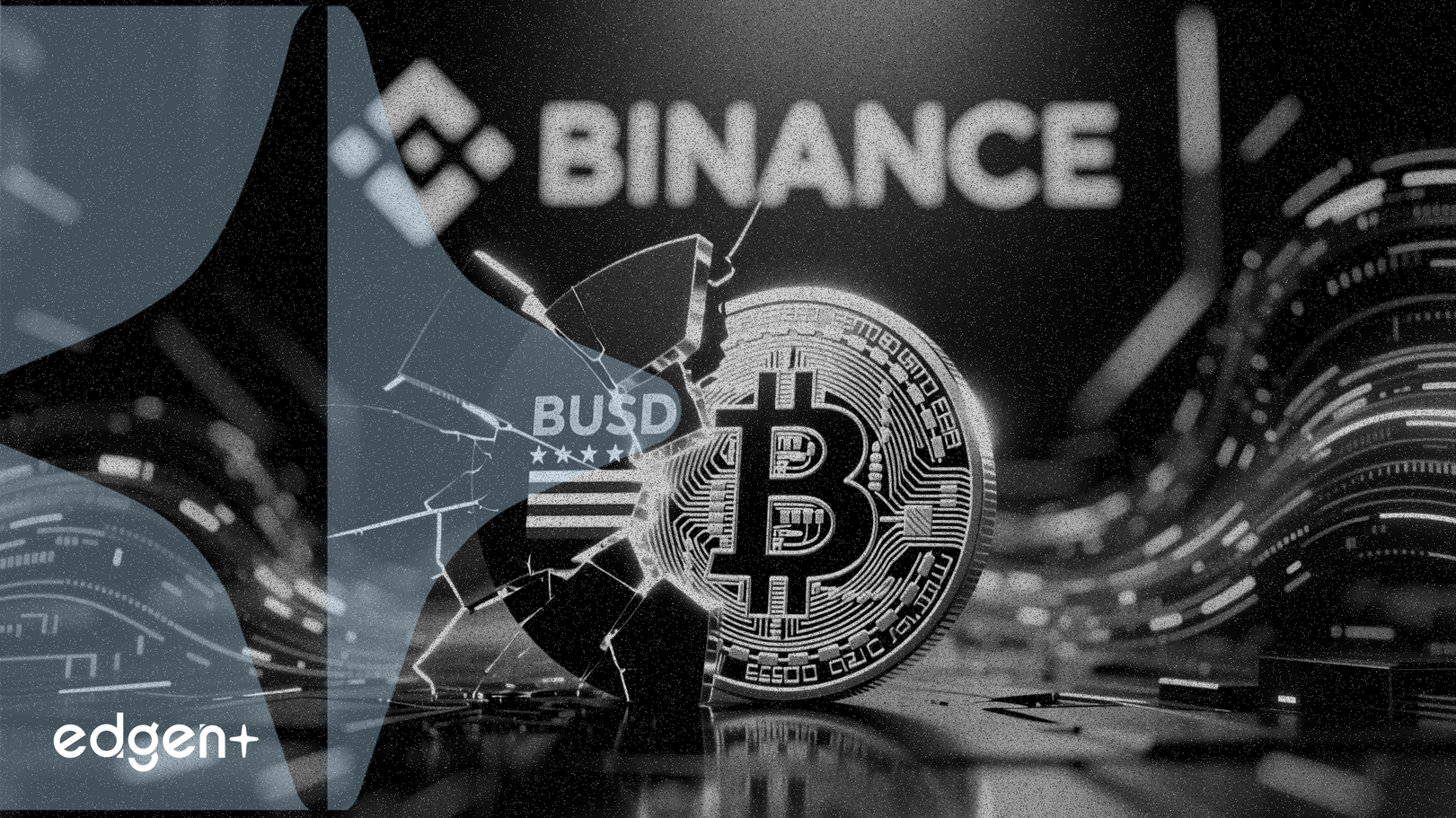
Binance has announced it will expand the use of World Liberty Financial's USD1 stablecoin across its platform, initiating a strategic conversion of its Binance USD (BUSD) reserves. This decision effectively phases out BUSD as a primary collateral and trading asset on the world's largest cryptocurrency exchange, replacing it with a stablecoin explicitly linked to business interests associated with U.S. President Donald Trump.
This is not merely a technical swap of one dollar-pegged asset for another. The move is a significant strategic pivot, aligning Binance with a potent political network that stretches from Washington to Abu Dhabi, its newly established global regulatory headquarters. The selection of USD1 occurs just months after the controversial presidential pardon of Binance founder Changpeng "CZ" Zhao, signaling a deeper integration between the exchange and the current U.S. administration's financial and political agenda.
Market Implications
The introduction of USD1 as a premier stablecoin on Binance has immediate and far-reaching implications for the stablecoin market, currently dominated by Tether (USDT) and Circle's USD Coin (USDC). By converting its own substantial BUSD reserves and promoting USD1 for trading and collateral, Binance is creating a powerful distribution channel that could rapidly elevate USD1's market share and liquidity.
This maneuver also introduces a distinct political dimension to the stablecoin landscape. While the U.S. government, under President Trump, has expressed strong opposition to a Federal Reserve-issued Central Bank Digital Currency (CBDC), which he called a "dangerous threat to freedom," the administration appears to be fostering a private-sector alternative. The Binance-USD1 alliance creates a politically palatable digital dollar, operated by a commercial entity with ties to the administration, standing in direct contrast to a state-controlled CBDC.
"Conservatives were promised that language banning a CBDC would be included in the must-pass NDAA," stated Representative Keith Self, highlighting the Republican party's firm stance against a government-run digital dollar.
Business Strategy and Political Realignment
This decision is the culmination of Binance's multi-year transformation from a nomadic, regulation-avoidant entity into a regulated financial institution. After facing a $4.3 billion settlement with U.S. authorities for anti-money laundering failures, the company has aggressively pursued regulatory legitimacy. In early December 2025, it secured a comprehensive suite of licenses from the Abu Dhabi Global Market (ADGM), establishing a formal, transparent operational base for its exchange, clearing, and brokerage services.
This regulatory pivot now appears intertwined with a political one. The pardon of "CZ" on October 23, 2025, was a pivotal event, wiping his criminal conviction and removing a major obstacle to his influence. By subsequently embracing a Trump-linked stablecoin, Binance is cementing its position within a new power structure. This strategy appears designed to navigate the complex U.S. regulatory environment by aligning with the prevailing political winds, ensuring its long-term viability as the plumbing for the institutional and politically connected crypto ecosystem.
Broader Context
The Binance-USD1 partnership unfolds against a backdrop of a maturing crypto market where retail participation is waning and institutional adoption is accelerating. On-chain data shows that the number of small-scale Bitcoin holders (addresses with 0.1+ BTC) has stagnated for the first time in a decade, and retail deposits to exchanges are at "historic lows." Concurrently, over 400,000 BTC have left exchanges for long-term holding, much of it via institutional products like ETFs.
Binance is adapting to this new reality. Its new ADGM headquarters is structured to serve institutional clients—market makers, hedge funds, and brokers—who demand regulatory clarity. The adoption of USD1 is a strategic extension of this, offering a stablecoin backed not just by reserves, but by formidable political capital. For investors, this means the crypto market's infrastructure is becoming increasingly intertwined with geopolitical and national political interests, a factor that now represents a core component of jurisdictional and asset risk analysis.