


Products
Trading Strategies
Markets
© 2025 Edgen Powered by

Ask AI About USDT0
No Data Yet

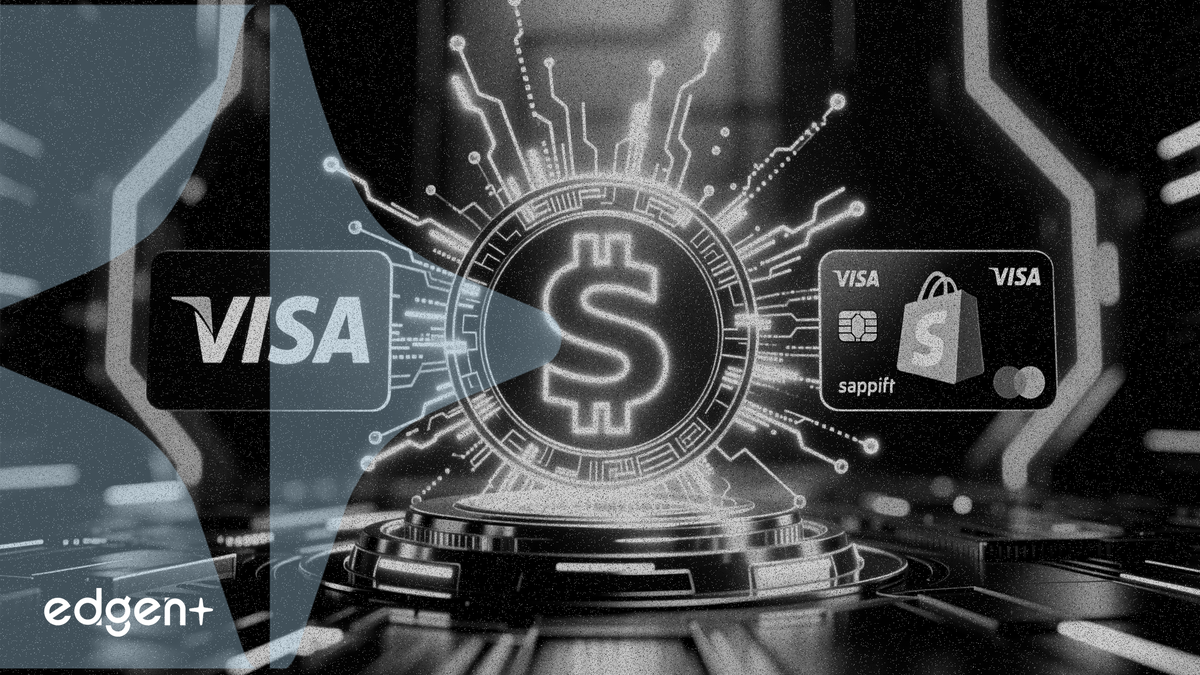
USDT0 Goes Live on Tempo, Unifying $71B in Liquidity On March 27, 2026, the payments-native Layer 1 blockchain Tempo integrated USDT0, bringing a unified liquidity network for the world's most-used stablecoin to its newly launched mainnet. The move provides Tempo with direct access to a shared USDT supply, eliminating the fragmented liquidity and reliance on third-party bridges that complicate cross-chain transactions. USDT0 has scaled rapidly, surpassing $71 billion in total value moved by February 2026, its first year of operation. This integration gives developers and institutions on Tempo a direct line to a proven omnichain settlement ecosystem, enabling dollar liquidity to move predictably and efficiently across different blockchains. Stripe and Visa Back Network for Institutional Payments Tempo's strategy is heavily anchored by its powerful backers and partners. The network was jointly incubated by payments giant Stripe and crypto investment firm Paradigm, and designed specifically to meet institutional needs for predictable settlement and stable transaction fees. This focus has attracted a formidable roster of global players who have been active in the network's rollout. The list of participants includes major firms from finance, e-commerce, and technology, such as Visa, Shopify, OpenAI, Mastercard, Nubank, and Standard Chartered. Their early involvement signals strong institutional interest in leveraging Tempo for large-scale, regulated payment flows, positioning it as a serious contender for real-world financial infrastructure. New Protocol Targets Automated Commerce with 100+ Services Beyond traditional finance, Tempo is engineered for the emerging economy of automated, machine-driven commerce. Alongside its mainnet launch, the project introduced the Machine Payments Protocol, an open standard co-authored with Stripe. This protocol allows machines and software agents to automatically request, authorize, and settle payments, targeting high-frequency, low-value transactions at scale. To support this vision, Tempo has launched a payments directory featuring more than 100 integrated services, including Alchemy and Dune Analytics. This ecosystem allows developers to monetize APIs and enables autonomous agents to transact seamlessly across providers. > As a payments-first blockchain, Tempo was built for environments where capital needs to move quickly and predictably. USDT0 brings unified USDT liquidity directly into that environment, giving builders access to dollar liquidity without managing fragmented pools or bridges. — Nischay Upadhyayula, GTM of Tempo.
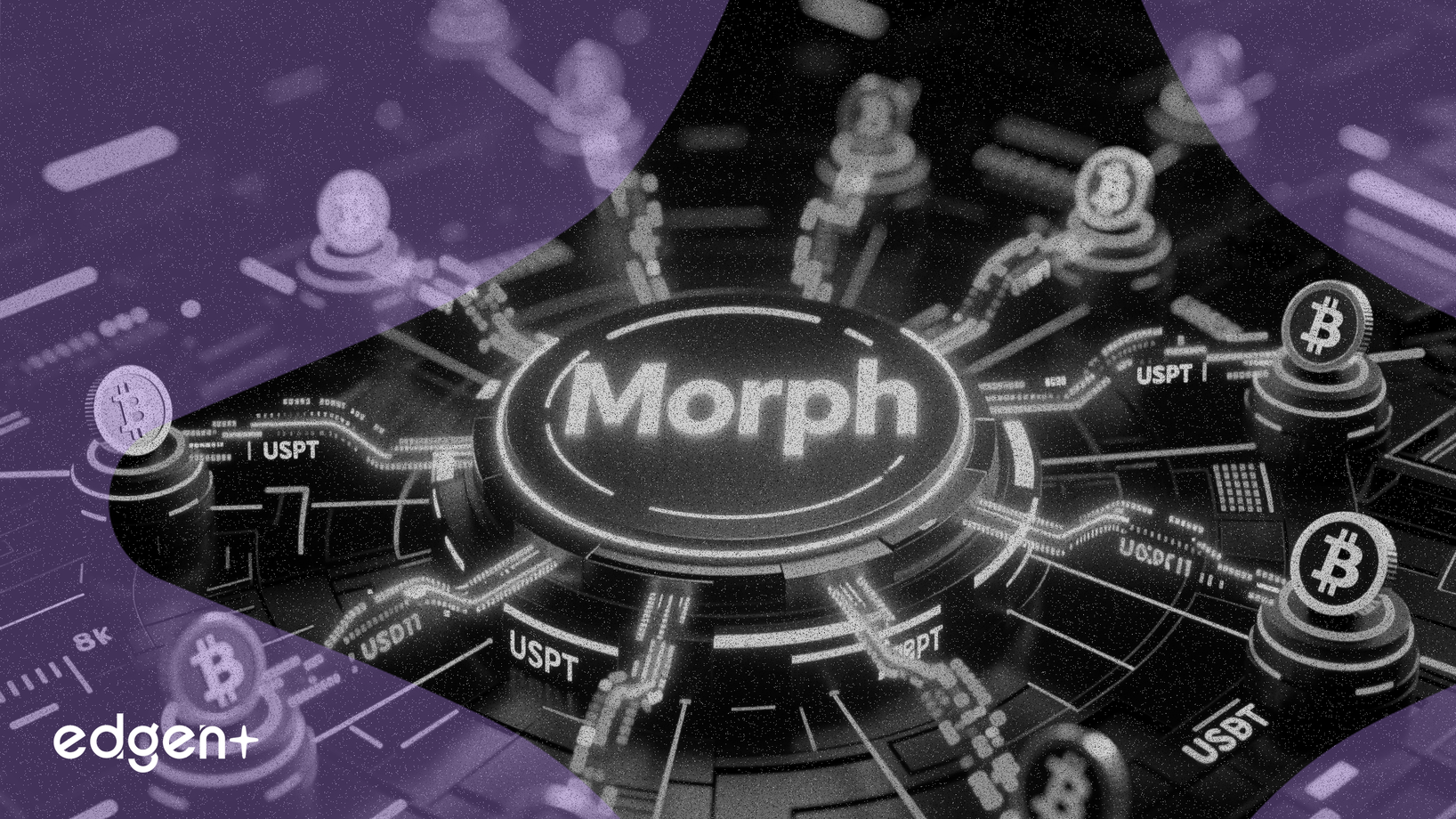
Morph Taps USDT0, Unlocking Liquidity Across 18+ Blockchains The Ethereum settlement network Morph completed its integration with the USDT0 stablecoin on February 13, 2026. This strategic move leverages LayerZero's interoperability protocol to connect Morph directly into Tether's liquidity pools, which span more than 18 blockchains. The integration provides users and decentralized applications (dApps) within the Morph ecosystem with seamless, native access to one of the market's most liquid assets. Integration Poised to Drive TVL and Developer Activity By embedding USDT0 directly into its network, Morph is positioned to significantly increase its on-chain activity and Total Value Locked (TVL). Direct access to the stablecoin simplifies transactions and removes liquidity friction for both users and developers. This enhanced utility is expected to make the Ethereum Layer 2 network a more compelling environment for building new projects, potentially leading to a substantial expansion of its dApp ecosystem and overall market footprint.

Executive Summary Everdawn Labs, in collaboration with Tether and powered by LayerZero, has launched cross-chain versions of USDT and XAUT, branded USDT0 and XAUT0, on the Solana blockchain. This initiative unifies stablecoin liquidity and introduces gold-backed assets, enhancing Solana's position in decentralized finance. The Event in Detail USDT0 and XAUT0 represent cross-chain bridged versions of Tether's USDT stablecoin and Tether Gold (XAUT), respectively. These tokens, managed and operated by Everdawn Labs, are now live on Solana through LayerZero's interoperability technology. While native USDT has been available on Solana for several years, USDT0 is designed to significantly expand its liquidity reach. Lorenzo R., co-founder of USDT0, stated that "Existing USDT on Solana can only circulate within the Solana ecosystem. With USDT0, Solana is directly linked to more than $175 billion in native USDT liquidity across Ethereum, Tron, TON, and other major chains, with no wrapped assets, no external bridges, faster settlement, and lower fees." This marks the first expansion of Tether Gold (XAUT) to the Solana ecosystem via XAUT0. The underlying technology, termed "Legacy Mesh" by Everdawn Labs, leverages LayerZero's protocol, focusing on stablecoin-specific interoperability. This infrastructure supports auditable liquidity pools and avoids wrapped or synthetic tokens, with each transaction on Legacy Mesh fully backed by real assets. Transfers incur a 0.03% fee, paid in USDT. Currently, the circulating supply of USDT0 is approximately 7.5 billion tokens, and XAUT0 stands at around 7,355 tokens, according to CoinGecko. For comparison, the native USDT circulating supply exceeds 180 billion, and XAUT totals 375,572. USDT0 is also live on other networks including Plasma, Polygon, Arbitrum, Berachain, Ethereum, Ink, Flare, Optimism, Hyperliquid's HyperEVM, SEI, and Rootstock, while XAUT0 is available on TON, HyperEVM, and Polygon. Market Implications The integration of USDT0 and XAUT0 into the Solana ecosystem is anticipated to have several market implications. It increases the velocity and interoperability of USDT tokens across the third-largest native Tether ecosystem. This allows users and developers to move USDT funds into Solana in a permissionless manner with reduced fees. The introduction of XAUT0 enhances Solana's role as a hub for real-world asset (RWA) tokenization, providing programmable and composable utility for gold. Lorenzo R. emphasized that "The combination of omnichain dollars and gold-backed value gives developers and institutions a foundation to build the next generation of applications, ranging from global remittances and corporate treasuries to programmable lending and asset-backed innovation." This development aims to streamline access to unified liquidity and gold-backed stability for decentralized applications, payments, and institutional finance within Solana's fast and low-cost environment. Expert Commentary Tamar Menteshashvili, Head of Stablecoins at the Solana Foundation, commented on the significance of this launch: "Solana is at the forefront of onchain finance, and the launch of Legacy Mesh takes that momentum even further. By connecting USDT on Solana with the broader Tether network, Legacy Mesh delivers the fastest and most cost-efficient access for USDT holders to the diverse Solana ecosystem—spanning DeFi, payments, and institutional-grade finance. This launch strengthens both the Solana and Tether ecosystems." Menteshashvili added that XAUT0 introduces similar utility for gold on Solana, making it a powerful asset for collateral, hedging, and onchain treasury management. Broader Context Solana's stablecoin supply experienced significant growth in the first quarter of 2025, with the total USD value of stablecoins on the network more than doubling from $5.2 billion in January to $11.7 billion in February. During this period, Solana averaged over 200 million on-chain stablecoin transactions per month. This expansion positions Solana as the third-largest in stablecoin liquidity among public blockchain networks, trailing Ethereum and Tron. Since its launch, USDT0 products have surpassed $25 billion in bridge volume across more than 320,000 transfers, supporting nine chain pathways. This positions USDT0 as the most active omnichain token within the LayerZero ecosystem. The strategic integration of these omnichain tokens on Solana is part of a broader trend toward enhancing cross-chain interoperability and liquidity for stablecoins and real-world assets across the digital asset landscape. This move eliminates the friction associated with wrapped tokens and third-party bridges, offering a more direct and efficient means of value transfer and utilization across various blockchain networks.

The Event in Detail Ink, an Ethereum Layer 2 solution incubated by Kraken and the Ink Foundation, has officially launched Tydro, a decentralized borrowing and lending protocol. Tydro operates as a custom-tailored, white-label instance of Aave v3. The Ink Foundation has characterized Tydro as "core infrastructure for DeFi on Ink." Concurrently, Kraken has announced its intention to integrate Tydro into its primary centralized exchange product, with the stated goal of providing its clients with more seamless access to DeFi opportunities. The INK token, central to the protocol, will be utilized to bootstrap liquidity and incentivize early adopters, including a system where users accumulate points representing claims on a future airdrop. Financial Mechanics Tydro inherits Aave's lending engine, which underpins the largest onchain lending protocol. Initial support on Tydro includes non-custodial lending markets for wrapped ETH (wETH), Kraken's wrapped bitcoin (kBTC), Global Dollar (USDG), Tether-backed (USDT0), and Aave's native stablecoin (GHO). Future deployments are scheduled to incorporate yield-bearing assets and liquid staking tokens. The INK token introduces an incentive structure designed to attract "Ink-native capital flows" and reward participation in the protocol. The Ink Foundation has specified that the INK token will not hold a governance role but will instead focus on liquidity aggregation and incentivizing the adoption of Ink-based applications. Business Strategy and Market Positioning The launch of Tydro positions Ink as a significant player within the Ethereum L2 ecosystem, leveraging the established technology of Aave. Aave itself commands a substantial market presence, securing $75 billion in net deposits and $30 billion in active loans, accounting for over 50% of all onchain lending activity. By adopting a white-label approach, Ink benefits from Aave's battle-tested infrastructure. Kraken's integration plans represent a strategic move to blend CeFi and DeFi offerings, allowing its user base direct access to decentralized lending services without leaving the exchange environment. This strategy aligns with Ink's objective to function as a concentrated source of capital within its blockchain, enhancing its competitive posture against other Layer 2 solutions like Base Network and Optimism. Broader Market Implications The introduction of Tydro is anticipated to result in increased Total Value Locked (TVL) and activity on the Ink L2, potentially influencing the market valuation of the INK token. This development also enhances the visibility and adoption of Aave's lending technology through its white-label deployment. Long-term, this initiative could establish a precedent for other major centralized exchanges to integrate decentralized finance primitives, thereby fostering greater mainstream adoption of DeFi. Such integrations are critical in bridging the operational gap between traditional centralized financial services and the burgeoning decentralized Web3 ecosystem, solidifying Ink's strategic importance as an Ethereum Layer 2 solution.
USDT0 (USDT0) current price is $0.999857, down 0.01% today.
USDT0 (USDT0) daily trading volume is $208.7M
USDT0 (USDT0) current market cap is $4.1B
USDT0 (USDT0) current circulating supply is 4.1B
USDT0 (USDT0) fully diluted market cap (FDV) is $4.1B
USDT0 (USDT0) is founded by Lorenzo Romagnoli