


Products
Trading Strategies
Markets
© 2025 Edgen Powered by

Ask AI About AGIX

No Data Yet

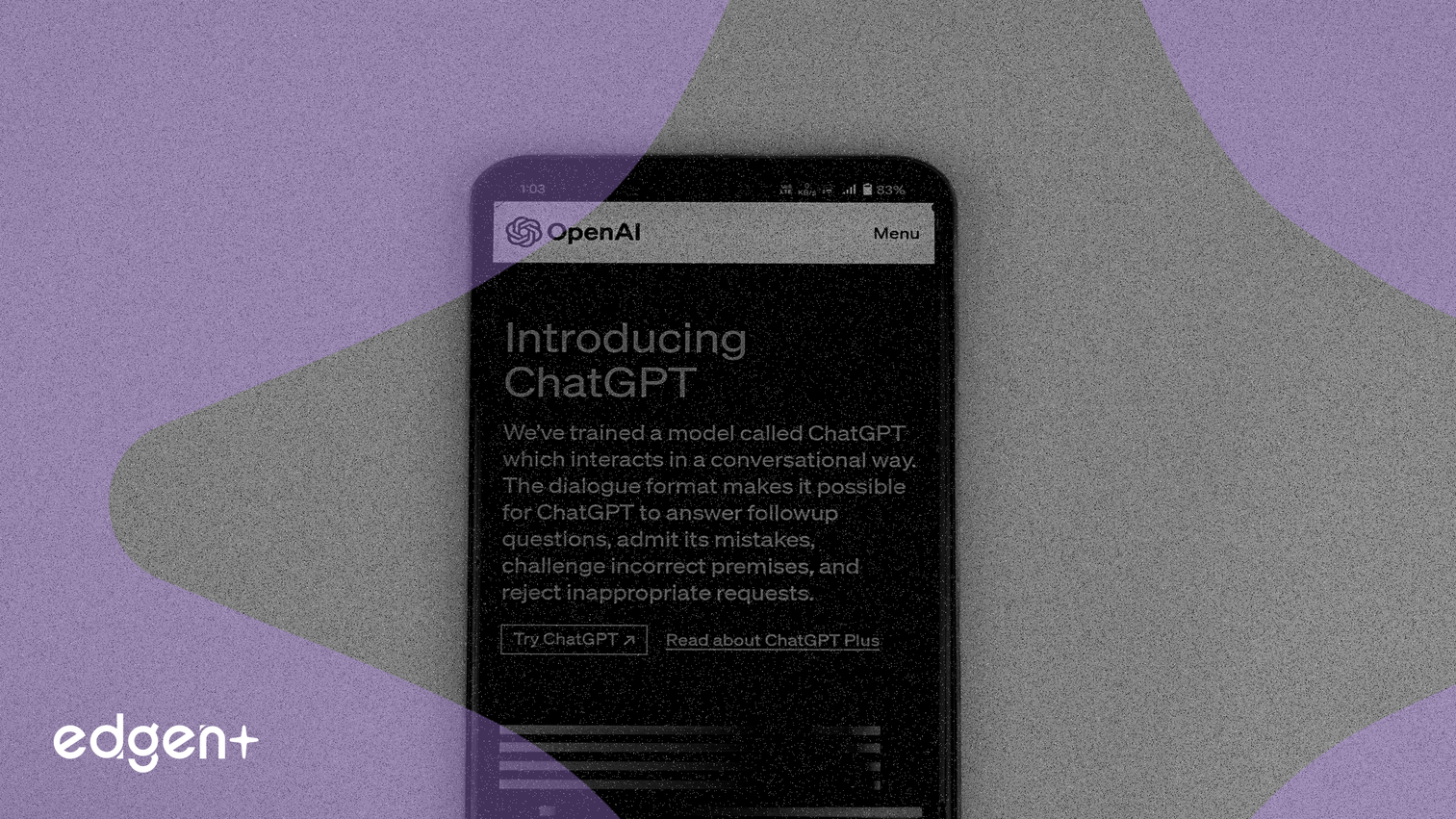
The Munich Court Ruling on AI Copyright Infringement A German national music rights organization secured a partial ruling against OpenAI in a Munich court, which found that ChatGPT's underlying models unlawfully reproduced copyrighted German song lyrics. The court specifically stated that GPT-4 and GPT-4o "memorized" lyrics, constituting reproduction under European Union copyright rules. This decision marks the first instance of a European court determining that a large language model violated copyright by memorizing protected works. The ruling mandates that OpenAI cease reproduction of the identified copyrighted material, disclose relevant training details, and provide compensation to the affected rights holders. While not yet final, and subject to potential appeal by OpenAI, the court's findings establish a significant legal precedent concerning the use of copyrighted content in AI model training within Europe. Financial and Market Implications for AI Development This ruling is expected to exert increased pressure on AI companies to secure licenses for the content utilized in their training datasets. This shift could lead to higher development costs for AI models and necessitate the establishment of new commercial frameworks for content acquisition, featuring explicit permission, attribution, and compensation for rights holders. Intellectual property (IP) compliance is increasingly becoming a material concern in investment, acquisition, and regulatory assessments within the AI sector. Precedent from early 2025, where a federal judge rejected a fair use defense in an AI training context, further underscores the evolving legal landscape where copyright law is affirmed to apply to AI development. Companies that rely on large-scale data scraping are now compelled to evaluate the sustainability and legality of their data practices. Broader Regulatory Landscape and Investor Sentiment The Munich court's decision sets a major European precedent for AI training data, contributing to an already complex and evolving regulatory environment for artificial intelligence. This development runs parallel to initiatives by the European Commission to potentially ease certain GDPR regulations to foster AI innovation, highlighting a nuanced regulatory approach that balances data privacy and innovation with intellectual property protection. Such regulatory scrutiny, encompassing both copyright and privacy concerns—as exemplified by recent discussions involving OpenAI's CISO regarding user privacy—can influence trading strategies in AI-related assets. This includes specialized cryptocurrencies like Fetch.ai (FET) and SingularityNET (AGIX), as well as stocks in the broader AI sector such as NVIDIA (NVDA) and Microsoft (MSFT). The need for clear classification of AI systems under regulations like the AI Act, especially for projects incorporating blockchain infrastructures, remains paramount for navigating this intricate legal and market landscape.

Executive Summary CoreWeave, a prominent AI cloud provider, has cemented a significant $1.17 billion artificial intelligence agreement with Vast Data, a firm supported by Nvidia. This collaboration, which designates Vast Data as the primary data platform for CoreWeave's GPU cloud infrastructure, resulted in CoreWeave's stock price surging nearly 4% in pre-market trading. The Event in Detail The agreement stipulates that CoreWeave will integrate Vast Data's platform into its cloud infrastructure, thereby providing customers with enhanced access to Graphics Processing Units (GPUs) essential for training and executing artificial intelligence models. While specific financial terms were not fully disclosed, Vast Data indicated that such contracts typically span three to five years. This partnership underpins CoreWeave's aggressive expansion, following a reported 420% year-over-year revenue increase in Q1 2025. The company also secured an $11.9 billion contract with OpenAI and acquired Core Scientific for $9 billion. Despite its $52.354 billion market capitalization and a 17.4x price-to-sales ratio reflecting investor optimism, CoreWeave reported a Q1 2025 net loss of -$314.64 million, with operating expenses surging 487% to $1.01 billion, resulting in a -3% operating margin. However, an adjusted EBITDA margin of 62% suggests potential for future profitability through efficient scaling. The company's projected $20-23 billion in capital expenditures for Q1 2025 further emphasizes its commitment to securing a dominant position in the AI cloud market. Market Implications The partnership's focus on GPU infrastructure and AI model training highlights the increasing demand for high-performance computing resources within the rapidly expanding AI sector. Nvidia's backing of Vast Data reinforces its strategic position at the intersection of AI and cloud computing, influencing market sentiment across related industries, including cryptocurrency. Nvidia's financial performance often acts as a barometer for the crypto market, particularly for AI-related tokens. For instance, in February 2025, prior to Nvidia's financial report, AI tokens such as Render (RNDR), SingularityNET (AGIX), and NEAR Protocol (NEAR) experienced single-day gains exceeding 10%. Conversely, market concerns in January 2025 regarding open-source models potentially reducing demand for high-end chips led to a 17% single-day plummet in Nvidia's stock price, coinciding with a drop in Bitcoin (BTC) to $83,000 and a 12% decline in RNDR. Nvidia's ongoing $50 billion AI infrastructure investment plan is expected to further deepen its integration with the crypto assets industry, directly benefiting "computing power leasing" tokens like Render (RNDR) and Akash Network (AKT), which anticipate revenue increases of 20%-30%. Broader Context This collaboration is part of a broader trend of integrating advanced artificial intelligence capabilities into Web3 ecosystems. Other notable developments include Imagen Network's partnership with xAI, aimed at incorporating multimodal intelligence to enhance creative engagement and dynamic content production across decentralized platforms. This initiative follows Imagen's ongoing integrations with Grok and Gemini models, emphasizing a modular AI infrastructure for scalable, personalized creator experiences. Similarly, Injective has launched iBuild, a no-code Web3 platform leveraging AI-assisted workflows to enable the creation and deployment of decentralized applications, ranging from perpetual exchanges to RWA protocols. These convergent efforts underscore a strategic imperative within the Web3 space to harness AI for infrastructure, application development, and user experience, thereby expanding the utility and accessibility of decentralized technologies.

21Shares launched two new crypto ETPs focusing on decentralized AI and Solana's DeFi ecosystem, expanding its European offerings to 50 and enhancing institutional access to these emerging sectors. Executive Summary 21Shares, a Swiss wealth manager, has introduced two new physically backed crypto exchange-traded products (ETPs) in Europe. The new offerings include the 21Shares Artificial Superintelligence Alliance ETP (AFET) and the 21Shares Raydium ETP (ARAY). These additions bring 21Shares' total ETPs in Europe to 50, with the firm managing over $11 billion in assets globally as of September 14, 2025. The launches aim to provide regulated investment avenues for institutional investors seeking exposure to emerging crypto narratives in decentralized AI and the Solana decentralized finance (DeFi) ecosystem. The Event in Detail The newly launched AFET ETP tracks a basket of decentralized artificial intelligence protocols, specifically Fetch.ai, SingularityNET, Ocean Protocol, and CUDOS. These protocols are unified under the Artificial Superintelligence (ASI) Alliance, which leverages the $FET token as its foundational asset. The AFET ETP is listed on Euronext Amsterdam and Euronext Paris, providing investors with direct exposure to this collaborative framework focused on advancing decentralized AI. Simultaneously, 21Shares introduced the ARAY ETP, which offers exposure to the RAY token of Raydium. Raydium functions as a prominent decentralized exchange (DEX) and automated market maker (AMM) within the Solana ecosystem. As of September 2025, Raydium secures over $2.3 billion in total value locked (TVL), positioning it as a significant liquidity hub on Solana. The ARAY ETP is listed on the SIX Swiss Exchange. These launches signify 21Shares' ongoing strategy to broaden its product suite, reaching a milestone of 50 physically backed crypto ETPs in Europe. The firm's global assets under management stand at approximately $11.52 billion. Market Implications The introduction of these ETPs by 21Shares expands regulated access for institutional investors to specific high-growth sectors within the cryptocurrency market. By offering ETPs tied to decentralized AI and Solana DeFi, the firm facilitates capital inflow into these specialized niches, which were previously less accessible through traditional financial instruments. This development further legitimizes crypto assets as an investable class for mainstream financial participants and strengthens 21Shares' position as a leading provider in the crypto ETP market. The move aligns with an increasing demand from institutional investors for exposure to next-generation decentralized technologies. Expert Commentary Market observers note that this expansion is bullish for institutional adoption within distinct crypto niches, particularly decentralized AI and the Solana ecosystem. The availability of such products suggests growing mainstream investor access to these themes, indicating a maturing market where specialized crypto assets are increasingly integrated into regulated investment frameworks. Broader Context The launch of the AFET and ARAY ETPs occurs amidst a surge of activity in the broader crypto ETP market. Recent developments include BlackRock's iShares Bitcoin ETP listing on the SIX Swiss Exchange and other European venues, as well as the approval of ETPs for various tokens like Floki Inu. This trend highlights traditional finance's increasing embrace of digital assets, with ETPs serving as a critical bridge. These financial instruments allow investors to gain exposure to underlying cryptocurrencies without the complexities of direct ownership, custody, or private key management. The targeted nature of 21Shares' new ETPs reflects a strategic focus on narrative-driven crypto sectors that are attracting significant developer activity and investor interest, such as decentralized computing and AI integration.
SingularityNET (AGIX) current price is $0.101701, down 1.11% today.
SingularityNET (AGIX) daily trading volume is $8118
SingularityNET (AGIX) current market cap is $24.9M
SingularityNET (AGIX) current circulating supply is 245.5M
SingularityNET (AGIX) fully diluted market cap (FDV) is $44.9M
SingularityNET (AGIX) is founded by Ben Goertzel