


Products
Trading Strategies
Markets
© 2025 Edgen Powered by

Ask AI About POL

No Data Yet

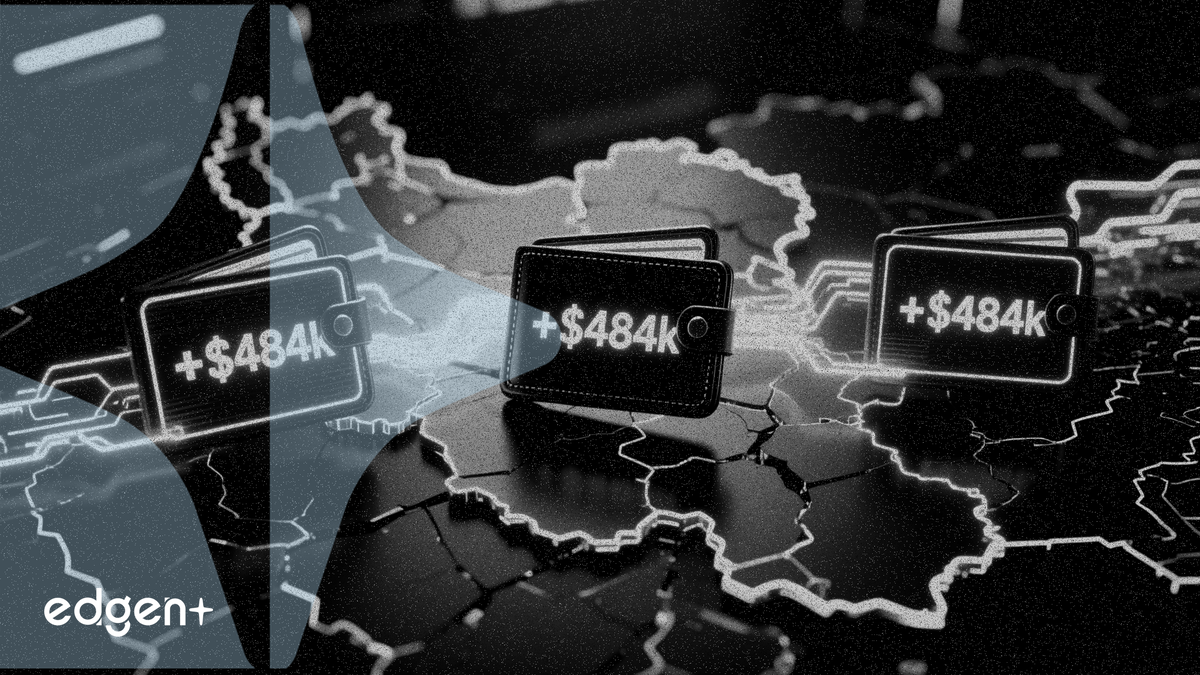
Three new wallets turned a timely bet on a US-Iran ceasefire into a combined $484,575 profit on the Polygon-based prediction market Polymarket, fueling accusations of insider trading. The activity was first highlighted by on-chain analytics firm Lookonchain on Wednesday. It noted that the three wallets were newly created and funded on Monday and Tuesday, with no prior on-chain history before placing large bets on the "US x Iran ceasefire by April 7" market. According to Lookonchain, the bets were placed at probabilities ranging from just 2.9 percent to 10.3 percent. One trader placed their first bet at 1:59 pm UTC on Tuesday, less than nine hours before the US president confirmed the agreement at 10:32 pm UTC. The other two wallets initiated their positions on Monday evening and Tuesday morning. Data from Polymarket shows the three wallets secured profits of $200,525, $158,600, and $125,450. This incident is the latest in a series of events raising questions about the potential for insider trading on prediction markets, which are facing increasing scrutiny from global regulators. The outcome will likely intensify calls for stricter oversight and user verification protocols on these platforms, potentially impacting their growth and user trust. Prediction markets have been a fast-growing sector in crypto, but their rise has been marked by controversy. In January, a US bill was introduced to restrict government officials from using these platforms after a trader profited over $400,000 betting on the capture of Venezuela's president. In a separate event, Israeli authorities arrested two individuals, including a member of the military, for allegedly using secret information to bet on future military actions against Iran. In response to these concerns, some platforms are taking proactive steps. Prediction market Kalshi announced in February a partnership with crypto surveillance firm Solidus Labs to better "detect, investigate, and address market abuse." This article is for informational purposes only and does not constitute investment advice.
OnePay Adds 13+ Tokens to Target New Crypto Users OnePay, the financial technology application majority-owned by Walmart, has significantly broadened its cryptocurrency services by adding over a dozen new digital assets. The expansion, which occurred on Thursday, includes prominent tokens such as Solana (SOL), Polygon (POL), Arbitrum (ARB), Cardano (ADA), and PAX Gold (PAXG). This move builds on the platform's initial crypto launch in January, which exclusively featured Bitcoin (BTC) and Ethereum (ETH). According to the company, the selection prioritizes assets with high demand, liquidity, and regulatory clarity. Ron Rojany, OnePay's general manager for its Core App & Crypto, stated the goal is to provide a curated selection aligned with customer needs rather than listing speculative assets. The company aims to provide an integrated and easy-to-use experience for customers who are newer to digital assets. While OnePay did not disclose user metrics, it reported "strong engagement" since its crypto services went live. Superapp Strategy Mirrors LATAM's $278B Neobanks OnePay's strategy to embed crypto within a broader suite of financial services mirrors the highly successful "superapp" model seen in Latin America. Platforms like Brazil's Nubank, which serves 131 million users, and Mercado Pago have demonstrated the power of integrating crypto buying, selling, and payments directly into their core banking apps. Mercado Pago, for instance, has 78 million monthly active users and processes $278 billion in annual payments, using crypto as a feature to drive engagement. By following this playbook, OnePay is positioning itself to become a dominant financial hub in the United States. The platform already offers high-yield savings accounts, credit cards, loans, and a digital wallet integrated with Walmart's checkout system. Adding a curated list of cryptocurrencies deepens this ecosystem, transforming digital assets from a niche investment into an accessible feature of everyday finance. Walmart's $462B Retail Engine Fuels Fintech Ambitions The most significant factor in OnePay's potential impact is the backing of its majority owner, Walmart. The retail giant recorded $462.4 billion in U.S. net sales in fiscal 2025, giving OnePay an unparalleled distribution channel to a massive consumer base. This integration provides the newly listed tokens like SOL and ADA with a powerful stamp of legitimacy and a direct on-ramp for mainstream retail adoption. Unlike standalone crypto exchanges, OnePay's value proposition is its seamless integration into an existing financial and retail ecosystem. For investors, this move signals a broader trend where established consumer-facing companies use a small, curated list of digital assets to enhance their platforms and attract a new generation of users, potentially driving significant demand for the selected tokens.
POL Token Declines Over 60%, Prompting Fee Model Review Polygon is grappling with a significant downturn in its native token's value, which has spurred a potential overhaul of its core tokenomics. The POL token has shed more than 60% of its value over the last twelve months, a stark underperformance that has raised concerns about its long-term viability and competitive standing. This prolonged price decline has prompted Polygon's developers to propose fundamental changes to its economic architecture. PIP-85 Aims to Restructure Network Fee Distribution In a direct response to the token's poor performance, the Polygon team put forward Polygon Improvement Proposal 85 (PIP-85) on March 26, 2026. This proposal outlines a structural overhaul of how network fees are distributed across the leading Ethereum layer-2 platform. The primary goal is to enhance the utility and value accrual mechanisms for POL holders. By adjusting the fee model, Polygon hopes to create a more robust economic incentive for holding and using the POL token. The success of this initiative is far from guaranteed. It hinges on both successful implementation by the development team and positive reception from the wider validator and user community. A failure to address the underlying competitive issues could see the token's value continue to languish.
Revolut Processes $1.2B in Stablecoin Transfers on Polygon Global banking firm Revolut has processed over $1.2 billion in stablecoin transfers through the Polygon network, confirming the blockchain's utility as a primary settlement layer for regulated financial institutions. This large-scale, real-world use case involves real users moving significant funds, leveraging Polygon's infrastructure to achieve transaction costs that are a fraction of a penny. By comparison, settlement on Ethereum is typically 426 times more expensive, highlighting Polygon's efficiency for high-volume payment flows. The integration is part of Polygon’s wider “Open Money Stack,” a suite designed to provide institutions with enterprise-grade wallets and regulated on-ramps. The development is further bolstered by Revolut's ongoing pursuit of a U.S. national bank charter, a move that could see a chartered American bank running its settlement infrastructure on Polygon, sending a powerful signal to the global financial sector. $POL Price Falters at $0.10 Despite Fundamental Growth Despite the significant increase in network utility, Polygon's native token, $POL, is struggling to gain traction. The token is currently trading around $0.0943 after a clear rejection at the key psychological resistance level of $0.10. The price action has since printed a series of lower highs and lower lows, finding temporary support near the $0.0939 mark. This price weakness creates a notable disconnect between the network's on-chain performance and its token valuation. The $1.2 billion in Revolut volume is only a small portion of the $932 billion in annual stablecoin transfers and $2.4 trillion in total stablecoin volume that Polygon has processed to date. For a sustained upward move toward a potential target of $0.18, the token must first reclaim the $0.10 level. Failure to hold the current support zone around $0.0930 could push the price back toward the $0.0910 demand area. Fintechs Increasingly Adopt Stablecoins for Global Payments The move by Revolut is part of a broader industry trend where financial technology firms are turning to stablecoins to overhaul cross-border payments. High costs in traditional finance, where remittance fees can exceed 7% in regions like Sub-Saharan Africa, are driving this shift. For instance, stablecoin issuer Circle recently partnered with Sasai Fintech to expand USDC use across African payment corridors, aiming to reduce settlement times and fees. This wider context validates Polygon's role as critical infrastructure for a new generation of financial services. As crypto adoption accelerates in emerging markets, with Sub-Saharan Africa seeing a 52% increase in on-chain value received through June 2025, blockchains providing low-cost, efficient settlement are becoming indispensable. The challenge for investors remains bridging the gap between this fundamental institutional adoption and the token's immediate market performance.
POL (ex-MATIC) (POL) current price is $0.084692, down 2.14% today.
POL (ex-MATIC) (POL) daily trading volume is $88.1M
POL (ex-MATIC) (POL) current market cap is $899.6M
POL (ex-MATIC) (POL) current circulating supply is 10.6B
POL (ex-MATIC) (POL) fully diluted market cap (FDV) is $899.6M
POL (ex-MATIC) (POL) is founded by Sandeep Nailwal