


Products
Trading Strategies
Markets
© 2025 Edgen Powered by

Ask AI About LINEA

No Data Yet

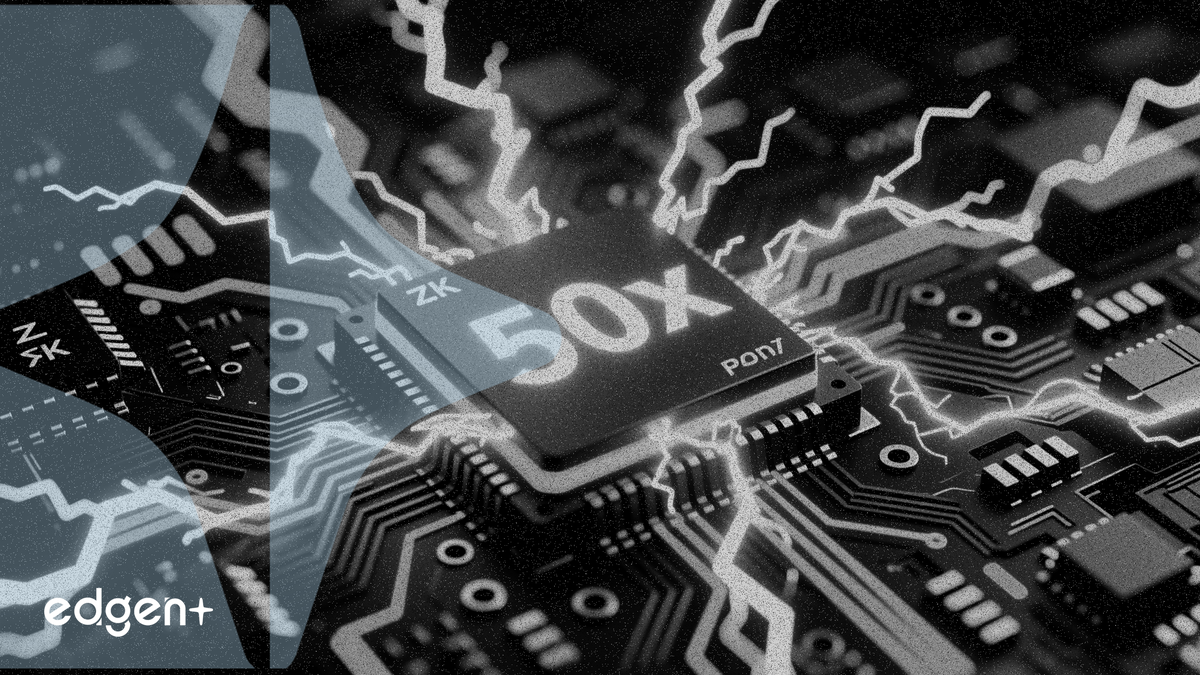
Linea, an Ethereum Layer-2 network, announced on April 7 a major upgrade that slashes its zero-knowledge proof generation time by 50 times, from 30 minutes to 60 seconds. "This is a significant technical breakthrough for Linea and the broader ZK-rollup space," the company said in a statement. "Faster proof generation is key to scaling Ethereum effectively." The upgrade implements a new small field architecture, which not only accelerates proof times but also cuts RAM requirements by a factor of eight. The network maintains its 128-bit security level, ensuring that the performance gains do not come at the expense of network integrity. This efficiency boost is expected to translate into lower transaction costs and faster finality for users. The move strengthens Linea's competitive position against other Layer-2 solutions like Arbitrum and Optimism. By drastically reducing the time and cost of generating proofs, Linea can potentially attract more developers and users, which could lead to a significant increase in its Total Value Locked (TVL) and on-chain activity. This article is for informational purposes only and does not constitute investment advice.
Linea Abandons EVM Prover After Three Years in Strategic Pivot On March 29, 2026, the Ethereum Layer 2 network Linea announced a fundamental overhaul of its core technology, pivoting its entire proving stack to RISC-V. The decision marks the end of its direct EVM arithmetization approach, a model the project has utilized for three years since its launch. This architectural change is not a minor update but a complete re-engineering of how the network validates transactions, signaling a significant strategic shift for one of the ecosystem's established players. Pivot Addresses Ethereum's 2026 L2 Fragmentation Crisis The move is a direct response to a growing crisis within the Ethereum ecosystem concerning the fragmentation of its Layer 2 scaling solutions. In early 2026, Ethereum's leadership, including co-founder Vitalik Buterin, intensified critiques that many L2s operate as isolated silos, undermining the goal of creating a seamless and unified scaling environment. Linea's pivot away from a proprietary proving method toward the more standardized RISC-V framework is a clear attempt to align with Ethereum's renewed roadmap, which prioritizes interoperability and shared standards to solve this fragmentation problem. Shift Balances Long-Term Alignment With Short-Term Execution Risk By aligning with Ethereum's forward-looking proving standards, Linea positions itself for enhanced long-term compatibility and efficiency within the evolving ecosystem. The strategy bets that a standardized approach will be a winning formula as Ethereum itself matures. However, this long-term vision comes at the cost of immediate execution risk. Overhauling a live network's core proving stack introduces significant development complexities and creates potential disruptions for existing applications built on Linea. Investors and developers will now monitor whether the network can navigate this difficult technical transition without losing its current momentum.

Linea Team Relocates $5.3 Million in LINEA Tokens The main wallet address associated with the Linea project executed a significant transaction, transferring 23,260,942 LINEA tokens to a newly created wallet (0x5A...1b34). At the time of the transfer, the tokens were valued at approximately $5.3 million. This large-scale movement of funds from a core team wallet has attracted scrutiny from market observers, as it represents a substantial portion of liquid assets being mobilized. Exchange Deposit Speculation Fuels Sell-Off Concerns This transfer is widely interpreted as a potential precursor to a sale on the open market. Historically, when project teams move large token quantities to new, unaffiliated wallets, the next step is often a deposit onto a centralized exchange. Such an action would introduce significant selling pressure on the LINEA token, potentially driving its price down. The move raises questions about the team's short-term intentions and has injected bearish sentiment into the market, as investors weigh the risk of the team liquidating a portion of its holdings.
LINEA Token Distribution Scheduled for February 2026 MetaMask has confirmed it will distribute LINEA tokens in February 2026 to participants of its inaugural Rewards Program, which officially ended on January 22, 2026. Eligible users must claim their tokens by the final deadline of February 23, 2026. This distribution marks the first major release of the LINEA token to a broad base of users, directly linking their in-app activities to a tangible crypto asset. Initial Price Discovery Confronts Expected Sell-Off The introduction of a large volume of LINEA tokens into the market is poised to create significant selling pressure. As reward recipients gain access to their holdings, many are expected to liquidate them, a common pattern following airdrops and reward distributions. This sell-off will provide the first real-world test of LINEA's market valuation and liquidity. While the event will boost the total supply circulating within the Linea ecosystem, the immediate price action will depend on whether buying demand can absorb the initial wave of reward-driven selling.
Linea (LINEA) current price is $0.003430, up 6.05% today.
Linea (LINEA) daily trading volume is $18.2M
Linea (LINEA) current market cap is $85.2M
Linea (LINEA) current circulating supply is 24.8B
Linea (LINEA) fully diluted market cap (FDV) is $246.7M
Linea (LINEA) is founded by Joseph Lubin